
2026 Beijing Motor Show – Chinese EVs are reshaping Australia’s car market
Market Insights
The AADA Study Tour of the 2026 Beijing Motor Show confirmed what many Australian dealers already feel on the showroom floor: Chinese electric vehicle makers are no longer the ‘new entrants’. They are now confident, well‑funded competitors with global ambitions, and Australia is firmly in their sights. Walking the vast exhibition halls in Beijing with over 1,400 cars on display, the scale, polish and speed of development on display was striking. This was not about concept cars. It was about high quality, tech laden production‑ready vehicles aimed squarely at export markets like ours.
The most obvious feature of the show was the breadth of Chinese electric vehicle (EV) offerings. From compact city cars to dual‑cab utilities, large family sport utility vehicles and luxury sedans, Chinese manufacturers are no longer confined to one segment. Many models were designed with right‑hand drive markets in mind and showcased safety, driver assistance and infotainment systems that Australian consumers now expect as standard.
Price remains the sharpest edge. Chinese manufacturers continue to benefit from scale, vertical integration and deep supply chains, particularly for batteries. At the show, it was clear that aggressive pricing is not a short‑term tactic but a long‑term strategy. For Australian dealers, this places pressure on margins but also creates opportunities to attract buyers who have been priced out of traditional brands.
Quality and brand perception were once the main question marks. In Beijing, those concerns are rapidly fading. Panel fit, interior finishes and software performance have improved materially. Several brands openly discussed extended warranties and localised after‑sales support for export markets. For dealers, this changes the sales conversation. The argument is no longer ‘cheap but compromised’, but ‘competitive and well‑equipped’.
From a legal perspective, the speed of Chinese market entry raises important dealership issues. Many Chinese manufacturers favour agency or hybrid distribution models, shorter initial dealer terms and tighter performance benchmarks. Dealers should look carefully at termination rights, minimum stock obligations, who carries the risk on slow‑moving vehicles or technology updates, after sales support and spare parts. What looks attractive at launch can become challenging if an effective after sales infrastructure for a sophisticated Australian market is not established.
Compliance risk was another quiet theme. Vehicles shown in Beijing are increasingly software‑defined, with over‑the‑air updates and data collection baked in. In Australia, that intersects with consumer law, privacy obligations and product liability laws. Dealers as the ‘supplier’ of the vehicles under the Australian Consumer Law (ACL) remain on the frontline with customers, even where software faults originate offshore. A dealer’s right to be indemnified by the importer from consumer law claims pursuant to the ACL may be compromised if the importer decides to exit the Australian market or becomes insolvent due to competitive market conditions.
The impact on the broader market including existing ‘legacy’ brands will be structural. Chinese EVs are accelerating price competition, increasing model turnover and shortening product life cycles. That affects floorplan finance, demonstrator strategies and used vehicle residuals. With around 20 Chinese brands already operating in the Australian market and around another 10 planning to come, the competitive pressure on legacy brands to compete in a market where sales volumes are steady is immense. It is inevitable that some of the lower volume legacy brands will exit the Australian market if their business models become unviable due to Chinese brands increasing their market share. This market pressure will be more acute for those brands that have a model mix that is adversely exposed to the New Vehicle Efficiency Standards (NVES). If legacy brands were to exit the Australian market, this would create challenges for dealers if there were no system in place to address the dealer’s indemnification rights under the ACL for consumer claims against the vehicle importer. This is an issue that may require Government policy intervention.
None of this should be read as a warning against Chinese brands. The Beijing Motor Show demonstrated genuine innovation and momentum. For Australian dealers, the opportunity is real, but so are the legal and commercial challenges. Success will depend on disciplined dealer agreements, clear understanding of regulatory obligations and a willingness to adapt traditional retail models.
The takeaway from Beijing is simple: Chinese electric vehicles are not coming – they are already here. Dealers who engage early, ask hard questions and structure their relationships carefully will be best placed to benefit from the next phase of Australia’s automotive transition.
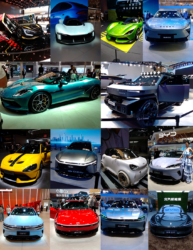
The images below were captured by the author at the 2026 Beijing Motor Show.
This article was written by Evan Stents, Lead Partner – Automotive Industry group.

Subscribe for publications + events
HWLE regularly publishes articles and newsletters to keep our clients up to date on the latest legal developments and what this means for your business. To receive these updates via email, please complete the subscription form and indicate which areas of law you would like to receive information on.
* indicates required fields